Reading time: 13 minutes
To show up in ChatGPT, a site must allow OAI-SearchBot, OpenAI’s search crawler. In addition, it needs pages and mentions that answer customers’ questions. It also pays to have good indexing in Bing, because Microsoft says Bing powers ChatGPT. Finally, no sign-up or payment puts a brand in the answer, and ChatGPT ads sit below it.
In short
- OAI-SearchBot decides whether a site can show up in ChatGPT search. GPTBot, on the other hand, serves training and can be blocked without removing the site from answers.
- Microsoft says Bing powers ChatGPT. So it pays to use Bing Webmaster Tools, a sitemap and IndexNow, which help Bing discover new pages.
- ChatGPT ads arrived in Brazil in August 2026. They sit below the answer and, according to OpenAI, do not change what it says.
- In a study by ESPM, a Brazilian business school, 57% of 552 brands were invisible to four AIs in questions about their own category.
Why does it matter for brands in Brazil to show up in ChatGPT?
According to StatCounter, ChatGPT is the AI that sends the most visitors to websites from Brazil. In September 2026, it generated 76.63% of the visits that chatbots sent from the country to the sites the company tracks. Gemini came second, with 17.95%.
According to OpenAI, Brazil is one of ChatGPT’s three largest markets by weekly active users. In addition, Brazilians send about 215 million messages a day to the assistant.
Brand presence, on the other hand, is rare. For example, a study by Professor Wilson Silva of ESPM São Paulo assessed 552 brands from 22 sectors. It ran 6,611 queries in ChatGPT, Gemini, Perplexity and Claude. Silva is also the founder and CEO of WS Labs, a company that offers a tool derived from the study.
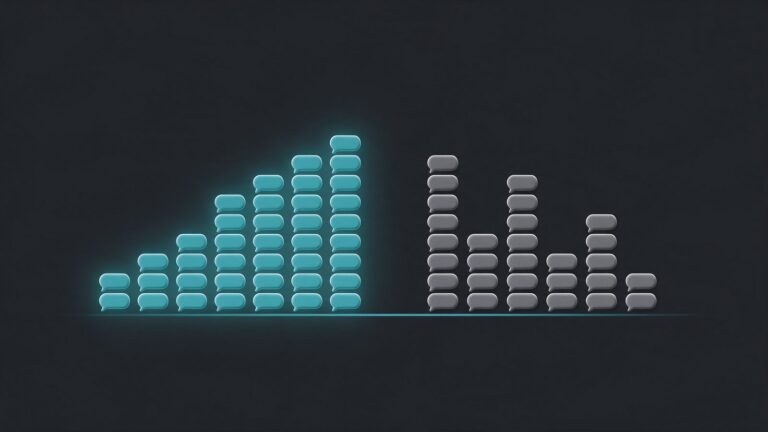
According to Mundo do Marketing, 57% of the brands were not cited by any of the four AIs in questions about their own category. They fell into the lowest tier of the scale the researcher created, the invisible tier. Only 35 brands, or 6%, reached the top tier. However, the report does not detail the full methodology.

How does ChatGPT choose the sites it cites?
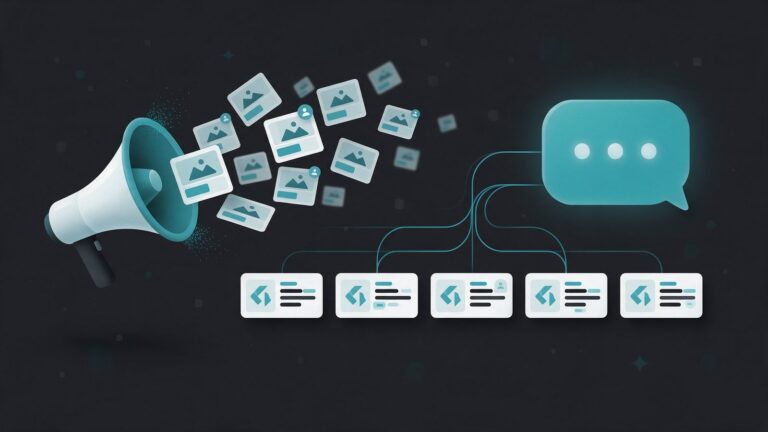
ChatGPT answers from memory or searches the web. When the question calls for current information, it rewrites the request into one or more queries and sometimes sends them to partner search engines. Then it reads the pages it finds and cites the sources. The order of results depends on several factors, and OpenAI does not guarantee placement.
For example, in the OpenAI Help Center, a question about cancer drugs that target CCR8 becomes the query “CCR8 immunotherapy drug development 2025”. After reading the first results, ChatGPT may send more specific queries to other providers.
When it mentions these providers, the same page points to the privacy policies of Microsoft and Shopify. According to OpenAI, a site must allow OAI-SearchBot to be able to show up in ChatGPT search. It also has to accept the crawler’s IP addresses at its host or CDN. Since some queries go to partners like Microsoft, good Bing indexing tends to help a page show up in ChatGPT. Without search, however, the answer comes from the model’s training and reflects the brand’s past presence on the web.
In other words, the competition happens query by query. So it pays to have pages for the questions the rewrite generates, such as price, comparisons and the city served.
Which OpenAI crawler should you allow: OAI-SearchBot, GPTBot or ChatGPT-User?
Allow OAI-SearchBot, the crawler behind ChatGPT search. After all, without it, the site cannot show up in ChatGPT answers that use search, only as a navigation link. GPTBot, by contrast, collects content for training and can be blocked with no effect on search. Finally, ChatGPT-User visits pages at a user’s request and does not decide who appears.
| Crawler | What it is for | Effect of blocking it |
|---|---|---|
| OAI-SearchBot | ChatGPT search | The site drops out of answers that use search |
| GPTBot | Model training | Signals that the content should not be used for training; search continues |
| ChatGPT-User | Visits a user asks for | robots.txt may not apply |
| OAI-AdsBot | Checking ad pages | Does not affect search; visits only ad pages |
According to OpenAI’s crawler documentation, the rules for each crawler are independent. So you can allow search and block training. OpenAI also recommends accepting the crawler’s published IP ranges, which involves the CDN and the firewall. If the site uses Cloudflare, see how to check whether Cloudflare is blocking ChatGPT.
A common mistake is to allow only GPTBot, thinking it is enough to show up in ChatGPT. However, it is OAI-SearchBot that controls this. The crawlers for Gemini, Perplexity and Claude are in the table in the guide on what GEO is.
Why does Bing matter if you want to show up in ChatGPT?
Bing matters because Microsoft says it powers ChatGPT. A page that is missing or outdated in Bing’s index has less chance of surfacing in the queries ChatGPT sends to its partners. That is why Bing Webmaster Tools, with a sitemap and IndexNow, is the way to control that indexing.
On the Bing Webmaster blog, Microsoft lists ChatGPT among the AI tools that Bing powers. Bing Webmaster Tools is also free. According to the same post, Bing processes sitemaps at least once every 24 hours.
- Register the site in Bing Webmaster Tools or import it from Google Search Console.
- Submit the XML sitemap with the lastmod field set to the date of the last real change to the content.
- Turn on IndexNow through the CMS plugin, the store platform or the CDN.
- Inspect the priority URLs in order to confirm that Bing has indexed them.
- Test robots.txt in Bing Webmaster Tools itself.
IndexNow notifies Bing and other participating search engines when a URL is created, changed or removed. According to the IndexNow FAQ, WordPress and Wix have native or plugin support, and Cloudflare offers a native integration. On sites with many updates, use IndexNow only for relevant changes, because each submission counts toward the crawl quota. Indexing in Google and Bing, side by side, is covered in the SEO and AI guide.
How long does it take for ChatGPT to cite a new page?
There is no official timeline to show up in ChatGPT. OpenAI says it does not guarantee placement in ChatGPT search. Likewise, Microsoft says no tool can guarantee when content will appear in AI answers. Instead, there are three stages: allowing the crawler, getting into Bing’s index and being chosen for the answer. However, only the first has a documented timeline.
The first stage is quick. According to OpenAI, a change to robots.txt takes about 24 hours to take effect in ChatGPT search. The second, on the other hand, depends on crawling. The IndexNow FAQ says discovery by crawlers can take days or weeks. IndexNow increases the chance that a page is discovered faster, but it does not guarantee immediate indexing.
For Microsoft, freshness signals influence how quickly updates reach Bing’s AI answers. Fabrice Canel and Krishna Madhavan, product managers at Bing, sum up the recommendation:
“Combining sitemaps and real-time URL submission methods like IndexNow gives your content the best chance to be discovered, crawled, and indexed efficiently.”
Fabrice Canel and Krishna Madhavan, Microsoft (2025)
Finally, the third stage has no clock. After all, meeting the first two only puts the page in the running. The choice depends on the query ChatGPT generates, the competing pages and the quality of the answer.
What changes with the user’s location and memory?
The answer changes from person to person. ChatGPT estimates location from the IP address and can use saved memories when it rewrites the search. So two people with the same question can get different sources. For a brand, therefore, this matters in local searches and makes a one-off test on a personal account useless.
According to OpenAI, ChatGPT may share general location with search providers, but not the IP address or account data. In the company’s example, “restaurants near me” becomes a search for the top restaurants in San Francisco. Similarly, with memory on, the search of someone who said they’re vegan may become “good vegan restaurants” in their city.
Local business pages should clearly state the city, neighborhood and area served, because the rewritten query may include the location. For clinics, stores and chains with several locations, see how to get AI to recommend a local business. In addition, visibility tests should use a temporary chat, with no personalization.
Can you pay to show up in ChatGPT?
You can buy ChatGPT ads, but you can’t buy a place in the answer. ChatGPT ads arrived in Brazil in August 2026. They appear below the answer, labeled as sponsored. According to OpenAI, they run on systems separate from the model, and advertisers cannot change or rank what the answer says.
The ChatGPT ads test started in Brazil on August 4, according to an OpenAI email to Olhar Digital, a Brazilian tech news site. It applies to users 18 and over on the Free and Go plans. The initial phase involved groups and agencies such as BETC Havas, Monks, Omnicom, Publicis and WPP. Later, in an August 11 update to its “Testing ads in ChatGPT” page, OpenAI confirmed that ads were already live in Brazil.
How do ChatGPT ads work?
According to the OpenAI Help Center, ChatGPT picks among eligible ads by relevance and bid, among other factors. The ChatGPT Plus, Pro, Business, Enterprise and Edu plans have no ads, and neither do temporary chats. According to the Ads Manager country list in the same Help Center, businesses based in Brazil can already advertise through self-service.
| Aspect | Organic answer | Ad |
|---|---|---|
| How to get in | Crawlable, citable content | A campaign in Ads Manager |
| Where it appears | In the text and the sources | Below the answer |
| Who sees it | All plans | Free and Go, users 18 and over |
| What decides | Relevance and reliability | Relevance and bid |
In other words, ChatGPT ads do not improve organic presence, and the organic answer does not depend on budget.
How do products get into ChatGPT answers?
Products get in through organic selection. When a question has shopping intent, ChatGPT shows options with an image, price and links. OpenAI says this selection is not advertising and does not depend on partnerships. Instead, it considers structured product data, third-party reviews and the context of the conversation.
According to the OpenAI Help Center, ChatGPT uses metadata sent by merchants themselves and by third parties, such as price and description. It also uses third-party content, such as reviews. When several merchants sell the same item, the order considers availability, price, quality and who the manufacturer or primary seller is. Finally, merchants can apply to send a product feed directly to OpenAI.
Use has grown fast in Brazil. PYMNTS Intelligence published the Brazil edition of the Global Digital Shopping Index with Visa Acceptance Solutions. In it, 32% of shoppers researched products on ChatGPT before their last purchase, while in 2024 the figure was 2%. At the same time, Google fell from 79% to 63% on the same question. The base is 1,046 Brazilians who used digital tools for a purchase in a physical store, in March 2026.
The catalog, the feed and reviews determine how a store’s products get into ChatGPT recommendations.
What your brand can do to show up in ChatGPT
The work has three fronts: technical access, presence in the index and content that deserves a citation, on and off the site. The steps below follow that order. None of them guarantees a citation, but each one removes a reason for the brand not to show up in ChatGPT.
- Allow OAI-SearchBot in robots.txt and check that the CDN and firewall accept OpenAI’s IP addresses. Decide on GPTBot separately, because it serves training.
- Register the site in Bing Webmaster Tools, submit the sitemap and then turn on IndexNow.
- Answer customers’ questions on pages with a direct answer at the top, sourced data and a visible update date.
- Spell out the obvious in text: brand name, category, city served, price and differentiators, not only in images.
- Earn mentions off the site, in the press, comparisons, review sites and industry communities.
- Keep product data complete and consistent across the site, feed and marketplaces, if the brand sells online.
- Measure with fixed prompts, repeated and collected from Brazil, in Portuguese.
The ESPM study shows why step 5 matters. According to the report, some brands had high domain authority on Google and zero visibility in the answers. On the other hand, companies with more modest digital metrics appeared among the category’s recommendations. The study does not point to GEO replacing SEO, but to a shift in the factors brands need to consider.
It pays to map the third-party sources AI consults about your category, such as the press, review sites and forums.
How to test whether your brand shows up in ChatGPT
Test with a fixed list of questions, repeated several times, not with a one-off check. So that the test is comparable, use a temporary chat, with no personalization, from Brazil and in Portuguese. Then record whether the brand was mentioned, whether the site was cited and which domains appeared as sources in each answer.
In server logs, OAI-SearchBot shows search crawling, while ChatGPT-User shows pages opened at users’ request. Clicks that reach the site appear in GA4; see where to find ChatGPT traffic in GA4. The full protocol, with the number of runs and the margin of error, is in the guide on how to measure your brand’s mentions and citations.
With many prompts or clients, collection moves to tools that track your brand in ChatGPT. Other assistants have their own rules, and what changes in Gemini, Perplexity and Claude calls for a separate test.
What we found when we analyzed 8 Portuguese-language guides on how to show up in ChatGPT
We analyzed 8 Portuguese-language pages that appear in searches for “como aparecer no ChatGPT” (“how to show up in ChatGPT”) and “ChatGPT Shopping”. Only 2 mention OAI-SearchBot by name. Another 2 tell readers to allow GPTBot, the training crawler, as if it controlled search. In addition, only 1 mentions Bing Webmaster Tools, and none mentions IndexNow.
Three pages give timelines, from weeks to six months, without citing a source. Only 1 explains that ChatGPT already has ads and that they stay separate from the answer. Another, by contrast, says AI platforms do not sell advertising in their results. Finally, only 1 of the 8 includes data on usage in Brazil.
Main sources
- OpenAI, Overview of OpenAI Crawlers (2026).
- OpenAI, Searching the web with ChatGPT (2026).
- OpenAI, Ads in ChatGPT (2026).
- Bing Webmaster, Start Using Bing Webmaster Tools to Improve Your Site Visibility (2025).
- Mundo do Marketing, report on the ESPM study of 552 brands (2026).
- StatCounter, AI chatbot market share in Brazil (2026).